Categories
Uncategorized

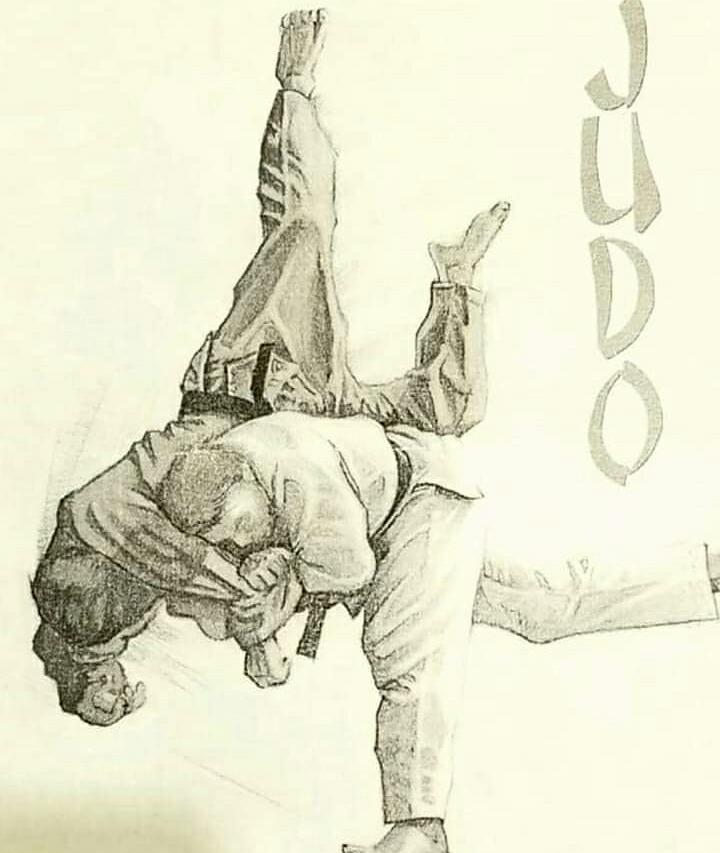
Thoughts About Judo

Our class have a one judo mast

To appreciate the best opportunity for attack and defence, you must fully understand the rhythm of movement.

……….

What is judo

In our society will have a lot of talented girls by the by our class also had that kind of person she was one of the judo mast. His name was hemalatha studies in government college of technology,coimbatore. By the by 2016, she got participated in more than 200 matches in judo thats why we called her as a judo mast.she participate district level competition held in trichy at that time she got a bronze medal and 2017 got a gold medal in National level competition was held in Maharashtra and 2018 got a bronze medal in district level competition held in villupuram finally once again got a silver medal in state level match held at trichy

By this way surely we know what kind of judo mast she is?. That girl wrote a kind of text what is judo

let’s see……….

This article will cover the positive
Effects the popular martial art of
Judo can have. We’ll tell you everything you need to know,
Including how the sport began,
Some of the basic rules, and how
You can get involved
What is it ?
Judo is a system of self defence ,
Which makes use of an opponent’s
Strength to overcome them,
Meaning that a smaller opponent
Can defeat a larger opponent.
‘JU’ means gentleness or giving way, and ‘dO’ means way of life, thus making judo mean literally’ the gentle way ‘or ‘the way of giving way’. Judo was founded in 1882 , in Japan , by professor jigoro kano, who envisioned it as a way of becoming physically and mentally
Fit through disciplined training
Health benefits
Judo can be practiced by all ages
And is a relatively safe sport as it
Does not involve any kicking or striking techniques. It is an excellent activity to increase physical fitness, boosting key leg and arm muscles,
Improving agility and flexible and
Developing the body’s cardiovascular system
Judo is open and accessible participants with a wide variety of
Disabilities. Because of the close
Contact involved in judo it is the
Ideal sport for the blind or visually impaired
Olympic integration
In 1964 at the Tokyo Olympic games, men’s judo was included in the games at the request of the host
Country Japan .In 1988 women’s judo was a demonstration event and
In 1992 become a full medal event.
In the Olympics,judo competitors compete in the following weight divisions:
Extra light weight :Men 60kg
(132lb), women 48kg(106lb)
Half light weight:Men 66kg
(145.5lb), women 52kg(115lb)
Light weight Men 73kg(161lb)
Women 57kg(126lb)
Half middle weight: Men 81kg
(178.5lb), women 63kg(139lb)
Middle weight:Men 90kg
(198.5lb) women 70kg(154.5lb)
Half heavy weight:Men 100kg
(220.5lb), women 78kg(172lb)
Heavy weight:Men +100kg, women+78kg
Getting started in judo
If you fancy taking to the mat and trying your hand at judo, then it is best to start with a properly registered club who provide professionally qualified coaches. Most towns or cities will have a martial arts club,or even a specialised judo club .if you’re a gym member it’s more than likely they offer judo or martial arts classes. Do not be afraid to look further afield though ,Google is a great way to find Judo clubs and their reviews.
What what you need to know
Before starting, you will need to know about equipment, rules and etiquette. we will talk you through the Judo ring, the clotting worn and some of the basic rules.
The Judo ring
A judo contest is conducted on vinyl covered foam mat area called ‘tatami’, the contest area being a square 8m.8m
This is surrounded by red outer metre ‘danger area’ which is inside the playing area, but competitors can only remind in that area for a few seconds before attempting throw or they will be penalised
There is a 3m outer zone ‘safety area’ in which participants can be thrown as long as the thrower reminds inside the contest area.
Clothing for judo bouts
Judo competitors are called ‘Judekas’ and the clothing they wear is called ‘Judo gi’.
Judo pants are called ‘zubon’ and the jacket is called ‘uwagi’.the belt identifies the skill level of the the competitor with black belt being the highest.
For identification purpose ,1 participant will wear a completely blue uniform and the other will wear white.
The referees in Judo
Three referees over see a bout. One Central referees controls the contest by moving around the mat while two others sit at opposite corners . each decision has to be agreed upon by at least two of the three or it is changed.
The Judo contest
An Olympic contest lasts 5 minutes for male ‘Judokas’ and 4 minutes for women ,provided that it has not already been stopped by the award of an ‘Ippon’

Categories
Uncategorized

About ourselfes

Photo by google

Be yourself; Everyone else is already taken.

— Oscar Wilde.

This is the first post on or new blog. we just getting this new blog going, so stay tuned for more. Subscribe below to get notified when I post new updates.

Already i’ll said, we are students. At the same time we want to develop our knowledge in a form of development,so we need a some platform to get a more and more contacts to establish our talents in our society. That means we want to unhide our talents to this surrounded world,so we create this.

By the by i’m also one of the student. Now i’m studying in Government college of technology, coimbatore Tamilnadu situated at India. I’m studying as Electronics and instrumentation department. Now we’ll see what is electronics, Instrumentation and combined course of Electronics and Insturmentation

let’s see………

What is meant by electronics…….???????????

ELECTRONICS

Electronics is the most important field that is fortunately less difficult to learn than you may think. But start in a right away beginning with electrical currents and circuits. After that you should proceed to implement them in small projects like building circuit board, preparing designs etc…

Following these steps, you may be able to make your own electronic gadgets someday.

  1. First get a basic understanding of important terms like Voltage, Current and Resistance.
  2. Build circuits from circuit diagrams
  3. Follow the basic understanding of electronics components
  4. Learn how to solder
  5. Build circuits using Integrated Circuits
  6. Design your own Circuit Board

https://www.build-electronic-circuits.com/how-to-learn-electronics/

Please check this link here you will find all these steps in details

All are just a spark…….

Instrumentation is all about measurement and control.

Any process plant has to continuously monitor and control four important parameters.

  1. Pressure
  2. Flow
  3. Temperature
  4. Level

This can only be done with the help of instrumentation.

To monitor continuously, first these parameters are to be measured and then controled.

Measurement: There are various instruments available for measurement of each of the above parameters.

  1. Pressure: Pressure gauges of various types, Pressure Transmitter’s etc.
  2. Flow: Vortexflowmeters, Magneticflowmeters, Turbineflowmeters, Mass flow meters, Venturi flowmeters, Orificeflowmetersetc.
  3. Temperature: Resistance Temperature Detectors (RTDs), Thermocouples, Thermistors, Temperature gauges etc.
  4. Level: Differential Pressure Transmitters (DPT), Level Trolls, Level gauges, Rotameters etc.

Control: In order to control the above parameters, we need control systems. Thewidely used control systems are.

  • Distributed Control System (DCS): A Process control system in which sensors/ transducers are distributed along the length and breadth of the plant and all these are interconnected in a network with controllers, operating stations etc.
  • Emergency Shut Down System (ESD): A faster control system which basically houses all the complex loops.

Hence it is safe to say that INSTRUMENTATION is the heart of any process plant.

ELECTRONICS AND INSTRUMENTATION

We find instruments at home and at workplace, and this was possible only because of the science Instrumentation. Since instrumentation being the order of the day, it is very much necessary for the young minds to get accustomed with the latest developments in instrumentation field. Moreover Instrumentation being one of the most important sought branches in Industrial point of view, a combination of Electronics and Instrumentation would fetch high dividends for the students who take up Electronics and Instrumentation Engineering as their career course.

This is a multi-disciplinary stream and covers subjects from various branches such as chemical, mechanical, electrical, electronics, biomedical and computers. This helps in making a switch to other disciplines, if anyone wishes to after completion of the Course. Instrumentation engineering is a specialised branch and it deals with measurement, control and automation of processes.

Nowadays, almost all industries are automated.Automation being one of the latest trend in all Industries, is therefore highly in need for expertise in the field of Electronics and Instrumentation to achieve their requirements. Automation is the core job of instrumentation engineers. As the trend of automation picks up in India and abroad, Instrumentation and Control Engineers are finding more and more job opportunities. Right from R&D units to aerospace companies, pharmaceuticals, food industries, thermal power plants, steel plants, fertiliser plants, automobile companies, biomedical companies, refineries and cement plants, these engineers find job opportunities in almost all domains of the world.

Control and Optimization is another important criterion in many Industries. Electronics and Instrumentation engineers having good exposure in these areas will be highly effective in solving various critical needs of the Industries.

An instrumentation engineer is responsible for designing, developing, installing, managing and maintaining equipments which are used to monitor and control engineering systems, machinery and processes.

Job Oppurtunities

Electronics and Instrumentation Engineers have a bright future ahead of them as they are needed by almost all Industries in various cadres like Design, Development, Automation, Control, Fabrication, Inspection, Quality control, Maintenance and Service and so on. Graduates from instrumentation and control programs can expect to fill positions such as:

☑ Instrument Engineer

☑ Automation Engineer

☑ Control Engineer

☑ Instrumentation Technologists or Technician

☑ Instrument Mechanic

☑ Control Systems Technologist

☑ Process Analyzer

Salaries in the field varies depending on the position, but the average starting salary is between Rs.8,00,000 and Rs.25,00,000 a year, and can increase to Rs.35,00,000 to Rs. 45,00,000 with experience.

An Instrumentation engineer has opportunities in many central government organisations like DRDO, ISRO,IOC, BARC, NTPC, Railways, BSNL, HAL, AAI, etc. Also many core companies like Honeywell, Texas Instruments, National Instruments, ABB, Larsen & Tourbo, Robert Bosch, Invensys, GE, Suzlon, Apna Technologies, Whirlybird, ESSAR, Yokogawa, Orange, LG, SAMSUNG, SONY, SANSUI, Whirlpool, Intel, Vedanta, Oil & Coal, Cadence, Cairn India, Linde, Allan Bradley, many software companies like TCS, Infosys, Wipro, CTS, HCL etc recruit these engineers.

Design a site like this with WordPress.com
Get started