

Be yourself; Everyone else is already taken.
— Oscar Wilde.
This is the first post on or new blog. we just getting this new blog going, so stay tuned for more. Subscribe below to get notified when I post new updates.
Already i’ll said, we are students. At the same time we want to develop our knowledge in a form of development,so we need a some platform to get a more and more contacts to establish our talents in our society. That means we want to unhide our talents to this surrounded world,so we create this.
By the by i’m also one of the student. Now i’m studying in Government college of technology, coimbatore Tamilnadu situated at India. I’m studying as Electronics and instrumentation department. Now we’ll see what is electronics, Instrumentation and combined course of Electronics and Insturmentation
let’s see………
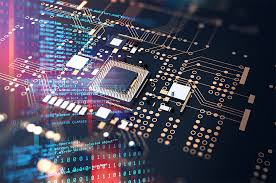
What is meant by electronics…….???????????
ELECTRONICS
Electronics is the most important field that is fortunately less difficult to learn than you may think. But start in a right away beginning with electrical currents and circuits. After that you should proceed to implement them in small projects like building circuit board, preparing designs etc…
Following these steps, you may be able to make your own electronic gadgets someday.
- First get a basic understanding of important terms like Voltage, Current and Resistance.
- Build circuits from circuit diagrams
- Follow the basic understanding of electronics components
- Learn how to solder
- Build circuits using Integrated Circuits
- Design your own Circuit Board
https://www.build-electronic-circuits.com/how-to-learn-electronics/
Please check this link here you will find all these steps in details
All are just a spark…….

Instrumentation is all about measurement and control.
Any process plant has to continuously monitor and control four important parameters.
- Pressure
- Flow
- Temperature
- Level
This can only be done with the help of instrumentation.
To monitor continuously, first these parameters are to be measured and then controled.
Measurement: There are various instruments available for measurement of each of the above parameters.
- Pressure: Pressure gauges of various types, Pressure Transmitter’s etc.
- Flow: Vortexflowmeters, Magneticflowmeters, Turbineflowmeters, Mass flow meters, Venturi flowmeters, Orificeflowmetersetc.
- Temperature: Resistance Temperature Detectors (RTDs), Thermocouples, Thermistors, Temperature gauges etc.
- Level: Differential Pressure Transmitters (DPT), Level Trolls, Level gauges, Rotameters etc.
Control: In order to control the above parameters, we need control systems. Thewidely used control systems are.
- Distributed Control System (DCS): A Process control system in which sensors/ transducers are distributed along the length and breadth of the plant and all these are interconnected in a network with controllers, operating stations etc.
- Emergency Shut Down System (ESD): A faster control system which basically houses all the complex loops.
Hence it is safe to say that INSTRUMENTATION is the heart of any process plant.
ELECTRONICS AND INSTRUMENTATION
We find instruments at home and at workplace, and this was possible only because of the science Instrumentation. Since instrumentation being the order of the day, it is very much necessary for the young minds to get accustomed with the latest developments in instrumentation field. Moreover Instrumentation being one of the most important sought branches in Industrial point of view, a combination of Electronics and Instrumentation would fetch high dividends for the students who take up Electronics and Instrumentation Engineering as their career course.
This is a multi-disciplinary stream and covers subjects from various branches such as chemical, mechanical, electrical, electronics, biomedical and computers. This helps in making a switch to other disciplines, if anyone wishes to after completion of the Course. Instrumentation engineering is a specialised branch and it deals with measurement, control and automation of processes.
Nowadays, almost all industries are automated.Automation being one of the latest trend in all Industries, is therefore highly in need for expertise in the field of Electronics and Instrumentation to achieve their requirements. Automation is the core job of instrumentation engineers. As the trend of automation picks up in India and abroad, Instrumentation and Control Engineers are finding more and more job opportunities. Right from R&D units to aerospace companies, pharmaceuticals, food industries, thermal power plants, steel plants, fertiliser plants, automobile companies, biomedical companies, refineries and cement plants, these engineers find job opportunities in almost all domains of the world.
Control and Optimization is another important criterion in many Industries. Electronics and Instrumentation engineers having good exposure in these areas will be highly effective in solving various critical needs of the Industries.
An instrumentation engineer is responsible for designing, developing, installing, managing and maintaining equipments which are used to monitor and control engineering systems, machinery and processes.
Job Oppurtunities
Electronics and Instrumentation Engineers have a bright future ahead of them as they are needed by almost all Industries in various cadres like Design, Development, Automation, Control, Fabrication, Inspection, Quality control, Maintenance and Service and so on. Graduates from instrumentation and control programs can expect to fill positions such as:
☑ Instrument Engineer
☑ Automation Engineer
☑ Control Engineer
☑ Instrumentation Technologists or Technician
☑ Instrument Mechanic
☑ Control Systems Technologist
☑ Process Analyzer
Salaries in the field varies depending on the position, but the average starting salary is between Rs.8,00,000 and Rs.25,00,000 a year, and can increase to Rs.35,00,000 to Rs. 45,00,000 with experience.
An Instrumentation engineer has opportunities in many central government organisations like DRDO, ISRO,IOC, BARC, NTPC, Railways, BSNL, HAL, AAI, etc. Also many core companies like Honeywell, Texas Instruments, National Instruments, ABB, Larsen & Tourbo, Robert Bosch, Invensys, GE, Suzlon, Apna Technologies, Whirlybird, ESSAR, Yokogawa, Orange, LG, SAMSUNG, SONY, SANSUI, Whirlpool, Intel, Vedanta, Oil & Coal, Cadence, Cairn India, Linde, Allan Bradley, many software companies like TCS, Infosys, Wipro, CTS, HCL etc recruit these engineers.
 EIEofGCT